Showing posts with label Google. Show all posts

Wednesday, 11 July 2012

Android 4.1 Jelly Bean roll out begins with Google Nexus devices; source code released


Google has commenced the rollout of its latest native operating system, Android 4.1 Jelly Bean, to Samsung-manufactured Nexus devices, beginning today with the Galaxy Nexus HSPA+ handset.
The company said that owners of the smartphone will receive a notification informing them that the refresh is now available, adding that other devices are due to follow in the near future. With its dev community in mind, Google also made Android 4.1 source code available to download on Monday, ahead of the widespread Jelly Bean push.
"The rollout of Android 4.1, Jelly Bean, begins today, starting with Galaxy Nexus HSPA+ devices...If you've got a Galaxy Nexus HSPA+ device, you will receive a prompt alerting you to the update," a post on the firm's Google+ page reads.
"Up next for Jelly Bean: all Galaxy Nexus, Nexus S, Motorola Xoom and of course, Nexus 7, which will ship with Jelly Bean later this month," the statement concludes.
News also emerged today that the Nexus 7 tablet looks set to be the first device to ship with the incremental Android 4.1.1 update when it becomes available to the general public. Partly, it is thought that Google developed a minor refresh so quickly to include workarounds to negate aspects of Apple's patent-based lawsuits, though 4.1.1 does contain a number of polishes, not least the addition of Google Wallet.
The Jelly Bean upgrade itself contains a number of key feature upgrades. Most notably, Google says it has pushed out a faster, more accurate Voice Search in a move that looks set to establish it as a genuine challenge to Apple's voice–activated search assistant, Siri.
Android 4.1 also heralds the introduction of Google Now, a programme that uses browsing habit analysis to provide users with the most relevant information, before they ask for it. Think the weather before you get dressed, transport problems before you step out the front door, and live sport scores before you even remember you're missing the big match and it's some indication of the ambition of Google's latest flagship app project.
Is anything missing from Jelly Bean 4.1, you ask? Our mobile editor Rob Kerr has the answer.
News also surfaced today hinting that the Nexus 7 tablet will be the first device to ship with the incremental Android 4.1.1 update, 
However, Google's enthusiasm at kicking off Jelly Bean rollout is likely to be tempered somewhat by the reality that the integrated search functionality that powers some of its improved features remains the subject of tense legal battles centred in the US but global in reach.
Last week, a US Federal Appeals court temporarily lifted a pre-trial injunction against the Galaxy Nexus, while in the UK the High Court ruled this week that Samsung's Galaxy Tabs were "not cool" enough to infringe on Apple's patents.


Sourced: http://www.itproportal.com/2012/07/11/android-41-jelly-bean-roll-out-begins-with-google-nexus-devices-source-code-released-to-devs/

Friday, 6 July 2012

Is the iPad getting a little brother? Apple to launch smaller and cheaper machine that could be on shelves this autumn


  • Smaller cheaper machine to launch 'soon' claim factory sources
  • Screen between 7 and 8 inches
  • Built to compete with cheap rivals such as Google's £159 Nexus 7
  • Sources in Apple's supply chain claim tablet is already in production
  • Earlier leaks hinted tablet would be on sale later this year
  • Launch will go directly against Apple founder Steve Jobs wishes
  • Apple is preparing to launch a smaller version of the multi-million selling iPad, it was claimed yesterday.
    The little brother of the tablet device would measure fewer than eight inches across the diagonal – considerably smaller than the current 9.7-inch model – and be cheaper.
    It was also suggested what has been dubbed the 'iPad Mini' could be available in the autumn – in time for Christmas.
    The competition: Apple's latest iPad on offers a fantastic experience in the hand - put a painful one in the pocket
    The competition: Apple's latest iPad on offers a fantastic experience in the hand - put a painful one in the pocket
    'Mid-sized' tablets such as Samsung's Galaxy Note have been big sellers - and have begun to eat into Apple's dominance of the tablet market
    'Mid-sized' tablets such as Samsung's Galaxy Note have been big sellers - and have begun to eat into Apple's dominance of the tablet market

    Apple is notoriously secretive about its technical innovations and rumours of the smaller tablet are said to have originated from the Far East, where many of the company's devices are manufactured.
    They were reported by Bloomberg and the Wall Street Journal, which quoted  several unnamed sources within Apple's supply chain. A UK spokesman last night said: 'Apple does not comment on rumour or speculation.'
    The current iPad costs upwards of £399 and industry insiders said an 'iPad Mini' would be an obvious response to competition from rival tablets such as Google's seven-inch £159 Nexus 7.
    Far Eastern technology blogs also hinted that a launch by Apple was imminent. Sterne Agee analyst Shaw Wu predicts that the move would be a devastating blow for Android competitors. 'It would be the competitors' worst nightmare,' he said.
    The late Apple co-founder Steve Jobs, who died last October, was vehemently against a smaller iPad, saying in 2010: 'The reason we won't make a seven-inch tablet isn't because we don't want to hit a lower price point, it's because we think the screen is too small to express the software.'
    The iPad Mini would show that Apple is prepared to break away from former chief exec Steve Jobs' deeply-held mantras.
    Future: Hugo Barra, director of product management of Google, unveils the Nexus 7 tablet today
    Future: Hugo Barra, director of product management of Google, unveils the Nexus 7 tablet today         
    WHY APPLE ARE WORRIED: THE 7-INCH TABLET THAT IS STEALING iPAD'S THUNDER
                              Nexus 7         iPad

    Price:           $199 (8GB)          $399(16GB)                                     $249 (16GB)
    Size:             7 inches              9.7 inches
    Weight:       340g                    650g

    Battery:        9 hours                   
    10 hours
    The Nexus packs a high-definition screen, the latest 'quad-core' processor, runs the latest version of Android, and has a battery life which can handle nine hours of continuous video playback.
    The firm hopes the tablet will take on Apple’s iPad.
    It's part of a new generation of iPad rivals, including Microsoft’s Surface tablet which was revealed last week, and current Android tablets including Amazon’s Fire.
    Two versions will be available, one with 8GB of storage for $199 and a second with 16GB for $249. By comparison, Apple's new iPad, which has a larger 9.7 inch screen, costs $399 for a 16GB version.
    The Windows version of a tablet: A The new Surface was unveiled by Microsoft last week
    The Windows version of a tablet: The new Surface was unveiled by Microsoft last week
    Amazon's Kindle Fire is likely to be hit hard by Apple's new launch - the cheap tablet is also seven inches, but built on unglamorous hardware
    Amazon's Kindle Fire is likely to be hit hard by Apple's new launch - the cheap tablet is also seven inches, but built on unglamorous hardware
    Earlier this year, a Samsung official appeared to confirm the existence of a smaller 'iPad Mini', due to be released this year.
    The official said to a Korean newspaper, 'The amount of the current contract [between Apple and Samsung] is around $9.7billion.
    'The contract is expected to rise to $11billion by the end of this year as Apple is planning to release a smaller iPad, probably with a 7.85-inch screen, and to sell more of its MacBook Air PCs using Samsung’s faster solid state drive (SSD) storage.'
    Microsoft also recently unveiled its own 'Surface' tablet, a touchscreen running its new Windows 8 software.
    Apple's new tablet will also be a concern to Amazon, as their Android-running tablets, such as the Kindle Fire, have been runaway successes in the U.S.
    Kindle Fire is also a seven-inch tablet, built around the old BlackBerry PlayBook, but running a customised version of Android focused on selling videos, apps and music via Amazon's Marketplace.
    Microsoft has previously tried and failed at bringing Windows tablets to the market.
    Bill Gates spent the tail-end of the 1990s trying to convince people that tablets were the wave of the future - but Microsoft never quite got either the hardware or software working together, and their early efforts - as long ago as 2001 - never convinced anyone.

    The runaway success of 'mid-sized' devices such as Samsung's Galaxy Note, which has a five-inch screen, has helped Samsung gain ground in the tablet market
    The runaway success of 'mid-sized' devices such as Samsung's Galaxy Note, which has a five-inch screen, has helped Samsung gain ground in the tablet market
    On the other hand, the risk to Apple is that a different-sized tablet might lead to fragmentation - where apps and games need re-configuring by their developers to ensure they are compatible on both versions.
    This has been Android's biggest issue in the last few years.
    Different screen sizes, different manufacturers, different versions of the operating system and different price-points all lead to choice for the consumer - but at the cost of development headaches and an inconsistent experience.

    Sourced: http://www.dailymail.co.uk/sciencetech/article-2169079/iPad-Mini-Apple-launch-smaller-cheaper-machine-shelves-autumn.html?ito=feeds-newsxml

    Thursday, 28 June 2012

    Google Glasses showcased with skydiving extravaganza

    Today at Google IO 2012, Sergey Brin, cofounder of Google, took the stage at the annual developers conference to demonstrate the much-talked-about Google Glasses or Project Glass.
    His presentation opened with a fellow Googler wearing the Google Glasses, while signed into a Google + hangout, and then sky diving out of a plane.
    Not only did the device stay on his face, but this extreme Googler was able to capture the entire sky dive to the top of the Moscone center with the Google Glasses without service interruption or errors.

    This was followed by a quick transition over to a few bikers doing acrobatic tricks and jumps, also while wearing the glasses.
    So it seems Google Glasses not only offers an augmented reality experience, but also lets more active users know how fast they're going on a bike, play tennis, walk around on a beach, as well as jump out of a plane.

    Google Glasses showcased with skydiving extravaganza

    Google Glasses lighter than sunglasses

    The rest of Brin's presentation was not as eventful, but he and his fellow Project Glass developers did explain that in order for these to be useful, they had to be "lighter than sunglasses."
    However, consumers will have to wait to try Google Glasses. They're not available to the general public yet.
    Brin announced at the conference that only eligible IO attendees will receive a Google Glass explorer addition, which is not for consumers. And, they're only accepting orders at the conference.


    Sourced: http://www.techradar.com/news/world-of-tech/phone-and-communications/internet/google-glasses-showcased-with-skydiving-extravaganza-1087181

    Monday, 25 June 2012

    Google Asus Nexus 7 images, specs leak


    Days ahead of the expected announcement of the jointly produced Google/Asus Nexus 7 tablet, an official render and spec sheet has been surfaced by Gizmodo Australia.
    The leak confirms that the device will indeed be a 7in tablet running Android Jelly Bean. A recent listing in the Google Play Store suggests that Jelly Bean will be an update to version 4.1, not 5.0 as previously expected.
    The Nexus 7 will be powered by a 1.3GHz quad-core Tegra 3 processor, GeForce 12-core GPU and 1GB RAM. It will ship with two storage options - 8GB and 16GB.
    The tablet will feature an IPS display, with a viewing angle of 178 degrees and a resolution of a 1,280 x 800 pixels. The spec sheet reveals the Nexus 7 will feature a 1.2-megapixel front-facing camera, and the images of the device suggest it will not have a rear facing camera.
    Pricing in US Dollars appears to match the rumoured range, with the 8GB version set to cost $199 (£130) and the 16GB at $249 (£160). The device will reportedly hit retail outlets in July.
    Neither Google nor Asus have confirmed the leak, though more details are sure to emerge at the upcoming Google I/O developers' conference on 27 - 29 June.
    Source and Image Credit: Gizmodo Australia


    Read more: http://www.itproportal.com/2012/06/25/google-asus-nexus-7-images-specs-leak/#ixzz1yows4Iuc

    Google TV service launches in UK with Sony tie-up

    Sony Google TV-enabled set top box
    Sony and Google have announced a tie-up that will see Google's interactive TV service made available outside the US for the first time.
    The set-top box allows users to browse the internet through their television, as well as access a range of specially designed applications.
    The device, which will cost around £200 when it is released in July, will compete with Apple's own TV box.
    Apple TV is already available in the UK, currently priced at £99.
    In a press release, Sony said their Google TV product, the NSZ-GS7, will also soon be made available in Canada, Australia, France, Germany, the Netherlands, Brazil and Mexico.
    Dual-sided remote
    "Entertainment content is available through so many channels and sites, and Google TV helps consumers easily find what they want to watch, listen to or play with the freedom of the internet and using the familiar Chrome search engine technology," said Gildas Pelliet, Sony's European head of marketing.
    The device will be followed with a Blu-ray version expected to cost around £300 when it is launched later in the year.
    The box will be controlled by a dual-sided remote control with a full QWERTY keyboard.
    Like Apple's offering, Google TV can be controlled via a smartphone.
    Google's foray into television has faced some hiccups since it first launched Google TV in the US in 2010.
    Its devices were criticised for being too expensive, and several TV networks blocked the US-only service from accessing their web content.

    Sourced: http://www.bbc.co.uk/news/technology-18555538

    Thursday, 21 June 2012

    Google, Asustek expected to unveil 7-inch Nexus tablet PC at Google I/O


    Google and Asustek Computer's jointly developed 7-inch Nexus tablet PC is set to be unveiled at Google I/O, a developer event that will be hosted from June 27-29 at San Francisco's Moscone Center in the US, with its initially price to be set at US$199 and manufactured by Quanta Computer, according to sources from upstream component makers.
    The 7-inch Nexus tablet PC already started shipping in June and is estimated to be available in the retail channel in July with the device's total shipments expected to reach at least three million units in the second half of the year.
    With Google expected to unveil the details of the devices at Google I/O, Asustek Chairman Jonney Shih will also attend the conference to jointly announce the tablet PC with Google.
    Due to its low price, the 7-inch Nexus tablet PC only supports a Wi-Fi connection and does not feature a back-side webcam, but will equip with a front-side webcam for video conference.
    The device will also be preloaded with Google's Chrome browser, with compatibility issues having been resolved to allow smoother operation for some software applications.
    As for Asustek, the company also plans to release its own 7-inch tablet PC with price at only US$159-179 in August

    Tuesday, 19 June 2012

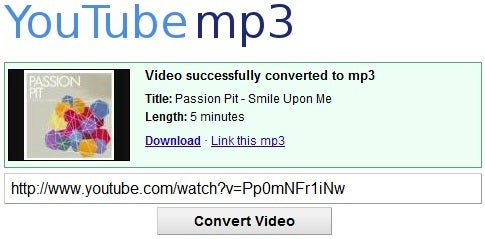
    Google Cracks Down on YouTube-to-MP3-Ripping Sites


    The free ride may ending for people who rip YouTube music videos to MP3s through youtube-mp3.org and similar sites.
    YouTube's lawyers have sent cease-and-desist letters to the sites, threatening “legal consequences” to those that don't comply,TorrentFreak reports. Youtube-mp3.org also claims that its servers have been blocked by YouTube, preventing any more conversions. (At the time of this writing, however, the site's MP3 extraction tool worked for me.)
    Over the years, YouTube has struck deals with record labels such as Warner Music Group and Universal to host music videos on the site. Although the music is always free, most videos have links to buy the songs on iTunes, Google Play and AmazonMP3. The video is supposed to be promotional, but conversion sites provide a way to take the music with you at no charge -- a practice that surely riles copyright holders.
    In an open letter, “Philip” from Youtube-mp3.org argues that Google, which owns YouTube, is being hypocritical, noting that the company scanned out-of-print books into digital form without permission, and shows news snippets from online publications on Google News at no cost, even as some publishers demand payment. Likewise, Philip argues that his site is bending the rules to serve the needs of users.
    Google Cracks Down on YouTube-to-MP3-Ripping SitesBut aside from that emotional appeal, websites that provide Youtube-to-MP3 conversion don't have a strong argument to stand on. YouTube's API terms of serviceforbid users from extracting individual elements from a video -- such as the audio component -- and from making any part of the video available for download. Conversion sites clearly violate those terms or service.
    It's not clear why YouTube is taking action now, since these sites have been around for a while. My guess is that copyright holders are pushing YouTube to crack down as the site tries to secure more professional content. Even if YouTube swats down some sites, others will surely crop up, andstandalone conversion tools will remain available. But for those rights holders, at least it looks like Google's doing something.
    Sourced:

    Wednesday, 13 June 2012

    The future of Google Search: Thinking outside the box

    The world's most popular search engine is trying to become more intelligent.

    Last month Google announced the introduction of the Knowledge Graph in the US - an effort to improve its results by teaching its servers to understand what the words typed into its search boxes mean, and how they relate to other concepts.

    It marks a big bet by the firm's head of search, Amit Singhal, who discussed the move with the BBC.

    In the past search engines haven't really known what words mean, how are you trying to change that with artificial intelligence?

    We had already done a lot of wizardry to give you relevant text, images and video in one simple interface, but computers still didn't understand that the Taj Mahal is a beautiful monument. Or it can be a Grammy-winning artist. Or it can even be casino in Atlantic City, New Jersey. And depending on if you are feeling hungry, it could also be a neighbourhood restaurant.

    Amit Singhal Mr Singhal revamped Google's search algorithm in 2001 and was put in charge of the feature

    To human beings that's just intuitive.

    To computers it's not, because of the following fundamental fact: computers are really good at representing strings of characters. They use Ascii and various other nomenclature to represent sequences of words and numbers, whereas human beings live in a world of things, not strings.

    What we did two years back was we acquired a company called Freebase that had found a novel way to represent things in computer memory.

    It was such an exciting opportunity because we can finally realise our dreams of moving search from being about strings to being about things.

    But that company only had a fraction of the number of objects and concepts categorised that you would need to make this work.

    Absolutely. Freebase had 12 million entities or things in it. And we invested heavily in it over the last two years.

    It now has knowledge of more than 200 million things. Not only that, it has interconnectivity between them.

    Start Quote

    We shouldn't go overboard with personalisation in search because serendipity is really valuable”
    End Quote Amit Singhal Head of search, Google

    For example, David Cameron is an entity, so is UK, and there is a relationship there of prime minister, and we represent that as well. It gives you what we call a Knowledge Graph.

    Does this Knowledge Graph let the computer understand what David Cameron is in the same way we do, or is it just a new, more complex algorithm?

    The truth is even we don't know how we as human beings understand things. We don't understand how our brain represents objects.

    To a computer, understanding means when you ask it something, it can tell you a lot more about that thing.

    For example it will be able to tell you for Taj Mahal that it's a monument, where it is, what you should know about it if you are interested in it, and not just a bunch of links.

    So I find that is a step closer to understanding than the current search systems.

    Is it representing things in a computer memory like a human does in our brains? I don't think we understand how we represent things, but the system will feel closer to our human understanding of the world.

    The other big theme in search is personalisation. How do you think this will develop?

    People conflate two things, context and personalisation, into this big lump called "personalisation".

    Context is fundamental to running search: what language you speak and where you are right now.

    Knowledge Graph side-panel The Knowledge Graph powers a side-panel providing a new way to explore a topic

    So when you type the query "pizza", we give you results in London, near you, in English and not Italian results from Rome - which some would argue is the most relevant pizza on this Earth.

    One of the objectives we have in the search team is to give the most locally relevant results, globally - and that's context.

    The other kind of personalisation is that when I type in "Lords", I get the cricket ground and not the Dungeons and Dragons game - which most other people in America would want - because I was raised with a healthy diet of cricket.

    That's personalisation which is based on you as a human being and not as a collective of citizens of London or so on. And the truth is context is more powerful than personalisation in average search usage.

    In my view we shouldn't go overboard with personalisation in search because serendipity is really valuable.

    We have explicit algorithms built into Google search so that personalisation does not take over your page.

    You need as a user to get all points of view. I don't want anyone to only get just one point of view. So in my view it will get more relevant, but personalisation will not take over your search page.

    On top of that, we will keep a control there where you can see what the page would have looked like if you turn off personalisation - but not context, because turning off context is really damaging to your results.

    At the moment people do most of their Google searches by typing into your search box. But we saw from your Project Glass video demo examples of results being pushed to a user based on their situation rather than the user having to pull them with a manual search. Will we increasingly leave your box behind?

    Sergey Brin wearing Google glasses prototype Google co-founder Sergey Brin has worn a prototype of the augmented-reality glasses in public

    From our perspective you have to make life simple, and a baby step in that direction is Google autocomplete.

    You type "w" - it computes that you may want "weather" because that's what most people look for when they type "w", and using Google Instant you can actually see the weather forecast without having to finish typing the query.

    So what we have done is not left the box behind, but made it so that you don't have to type the whole query.

    Now you can imagine there are some contextual cues where you don't even have type the first letter to fill out what most people in similar contexts do.

    So for example, if someone is standing in front of Buckingham Palace and most people who stand there query "Trafalgar Square", then potentially that would be a suggestion that could happen without even going to the box.

    These are all experimental research problems that we clearly think about all the time, and have to find ways to provide value to the user.

    Unless we can find a product that provides value to the user, these will remain research projects.

    But is your instinct that in a decade's time, much of our search activities will be done without the user having to manually initiate it?

    That's a dream that may happen in 10 years but I can't predict that far out.

    We live in the internet age - and 10 years is like 100 years in real life here.

    But I do believe that your context is very important, and Google should be someone by your side who can help you.

    I often talk about the fact that on my Google Calendar I have gaps that signal I'm free at that time.

    Screenshot from Google's Project Glass demo The Project Glass demo showed a weather forecast search prompted by the user looking out of a window

    And if I have a to-do list which can be knocked down, I wouldn't mind a reminder saying: "Your to-do list says call your son, you have an hour free."

    That has to be unobtrusive and to the side and low key, and it has to be done with full transparency and control.

    What else does the future of search hold?

    What excites me tremendously these days is the connectivity and the mobility that the future world will have, which we are already seeing emerge through smartphones.

    I have the power of thousands of computers in my pocket - because when I type a query [into a handset] it really takes thousands of computers to answer that query.

    So we are sitting at this wonderful junction where various technologies are ripening: mobile technologies, networks, speech recognition, speech interfaces, wearable computing.

    I really feel that these things put together will give us products five years from now that will change how you interact with computers.

    The future will be very exciting once you have a wearable computing device. It kind of changes how you experience things.

    Sourced: http://www.bbc.co.uk/news/technology-18327263

    Icann reveals new internet top-level domain name claims

    The full list of submissions for new internet address endings has been published by the global organisation co-ordinating the expansion.

    Requests to the Internet Corporation for Assigned Names and Numbers (Icann) include .porn, .ninja, and .ferrari.

    The BBC was among the applicants, applying for .bbc as an alternative to .co.uk and .com.

    Several top-level domains have been applied for by more than one party, including .sex, .home and .diy.

    Both the US drugmaker Merck & Co and its German rival Merck KGaA appear to have applied for the .merck ending, which may trigger an auction process.

    However the .uk manager, Nominet, looks likely to secure .wales and .cymru after no-one filed identical claims.

    Likewise the Dot Scot Registry was the only organisation to apply for .scot and the League of Arab States the only body to claim .arab.
    Objections
    Samsung - which had objected to the process - has taken part, applying for both .samsung and its equivalent in the Korean alphabet.

    However, Coca-Cola and the cereal manufacturer Kellogg's, which also signed a petition in protest, have abstained.

    By contrast Google has applied for dozens of the generic top-level domain (gTLD) name strings.

    Obvious choices included .google and .youtube, but there were also unexpected inclusions such as .and, .boo, .dad and .new.

    The search giant has also requested .music, which has been claimed by seven other organisations including the online retailer Amazon.

    Other gTLDs attracting multiple requests include .art, .book, .news, .play, .shop and .vip.

    The most contested name is .app which received 13 applications.

    Icann said that it had received a total of 1,930 requests for its first round of new net names - 166 of them were in alternatives to the Latin alphabet.

    It has now invited anyone with an objection to any of the claims to lodge their complaint within the next seven months.

    Icann then aims to make the new domains live in batches of about 500, with the first set going live some time after March 2013.

    "The plan we have delivered is solid and fair," said Icann's chief executive, Rod Beckstrom. "It is our fundamental obligation to increase innovation and consumer choice."

    However, critics have attacked the plan, noting the costs involved and the fact that bodies in the first batch to be processed may gain an unfair advantage.

    Nations including Brazil, China and Russia have also suggested Icann's functions be passed to the UN or another body more under governments' control.
    Expenses
    Applicants had to pay a $185,000 (£118,800) fee to take part in the application process. They also face a minimum $25,000 annual renewal charge to keep their suffix once it has been granted.

    BBC Television Centre The BBC made one of 40 applications for a new top-level domain name from the UK

    That may have discouraged some public bodies from participating, but the BBC's controller of research and development, Matthew Postgate, defended the broadcaster's involvement.

    "This is an important extension of the BBC's brand-protection policies," he said.

    "In the future the use of .bbc domains might ensure content is even easier to access and navigate for our audiences, clearly identified as coming from the BBC, or more secure and scalable."

    The BBC's domestic rivals Sky and ITV have also applied for a suffix, as have the American broadcasters ABC and CBS. However, CNN and PBS abstained.

    One internet brand consultant noted that the business world appeared to be split over the perceived benefits of having one of the names.

    "While Next and Boots are investing in a .brand for their online retail future, all the other big British retailers missed the boat," said Stuart Durham from Melbourne ITDBS.

    "The big names of the internet have either invested massively or not at all. Amazon for example has applied for 76 names, Google for 101 and Microsoft 11. But there's no applications from Facebook or Twitter.

    "There are different strategies in play here and some big gambles."

    Sourced:
    http://www.bbc.co.uk/news/technology-18428324

    Tuesday, 12 June 2012

    Google to be investigated over data cover-up claims


    Google Street View Map London
    A Google Street View camera car waits at a light on Bury Place in London, England. Photograph: Harold Cunningham/Getty Images
    Google is facing mounting pressure after the information commissionerlaunched an investigation into claims that it orchestrated a cover-up of its capture of emails, passwords and medical records of people in the UK.
    The UK data watchdog has written to Google demanding answers after it emerged that the search giant knew its Street View cars could harvest personal information as they photographed homes across the globe.
    On Tuesday the information commissioner's office said it was likely that highly private data – including email messages and browsing history – was secretly and deliberately captured from internet users in the UK.
    Google will now have to explain whether it misled regulators over the saga, which has hounded the company for more than two years.
    On Tuesday the ICO formally opened a fresh investigation into the company. In a letter to Google, the ICO said: "During the course of our investigation we were specifically told by Google that it was a simple mistake and if the data was collected deliberately then it is clear that this is a different situation than was reported to us in April 2010."
    Steve Eckersley, the ICO's head of enforcement, sent Google senior vice president, Alan Eustice, a list of seven questions asking when it knew that the so-called "payload data" could be harvested from UK internet users.
    The letter also demands a "substantial explanation" of why Google did not indicate that this private data was collected in the UK when officials audited the company in July 2010.
    A spokeswoman for Google said: "We're happy to answer the ICO's questions. We have always said that the project leaders did not want and did not use this payload data. Indeed, they never even looked at it."
    Google faces a £500,000 fine if the ICO believes that its Street View cars breached data protection laws. The company could also face a police investigation if it is proved that it intentionally orchestrated unauthorised electronic eavesdropping.
    The company sent its fleet of Street View cars to photograph homes in the UK in March 2009, three years after the engineer developed the technology that could capture private data.
    It emerged only in April this year that the Google engineer behind the technology advised colleagues that internal privacy lawyers should specifically authorise its use. A report by the US Federal Communications Commission (FCC), which fined Google £15,000 over the affair, said that legal advice was never taken. The FCC said the collection did not breach US privacy laws.
    The ICO launched its initial inquiry into Street View in early 2010 after it admitted that it mistakenly collected some information. The watchdog concluded that no personal data was collected, before later admitting that it had.


    Subscribe in a reader